THAAD System: New Missiles in Fiscal Year 2025 Budget
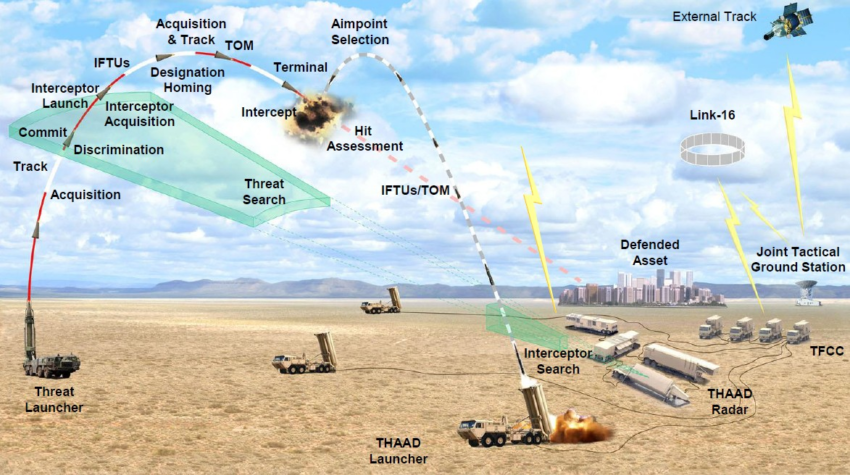
**The U.S. Department of Defense has made a significant move by including the procurement of 12 new THAAD missiles in its budget request for the fiscal year 2025.** This request outlines plans to enhance capabilities for detecting, intercepting, and neutralizing ballistic missile threats aimed at the United States, its deployed forces, allies, and partners. Central to this strategy is the Terminal High Altitude Area Defense (THAAD) System, which plays a vital role in the nation’s missile defense architecture.
In addition to acquiring new interceptors, the fiscal year 2025 budget also focuses on the modernization of existing THAAD components. This includes updating aging interceptors to ensure reliability and effectiveness against evolving missile threats. The THAAD System is uniquely capable of engaging short, medium, and intermediate-range ballistic missiles, with the distinct ability to intercept targets both within and outside the Earth’s atmosphere.
According to a report by Army Recognition, the budget specifically earmarks funding for the acquisition of 12 THAAD interceptors alongside essential software upgrades. These enhancements are aimed at improving the system’s overall reliability and readiness, ensuring it remains capable of addressing a broad spectrum of threats, including those posed by variable-range ballistic missiles.
Initially developed by Lockheed Martin, the THAAD System has been a cornerstone of U.S. air defense since its testing began in 1995. Following its inception in 1992, the system achieved its first successful target destruction in 1999 after six test launches. THAAD boasts a range of 200 kilometers and can operate at altitudes of up to 150 kilometers, providing upper-tier protection as part of a comprehensive air defense strategy.
A typical THAAD battery comprises nine missile launcher carriers, each equipped with eight missiles, two mobile tactical operation command centers, and a ground-based radar system. The missiles themselves measure 6.17 meters in length and weigh 900 kilograms, powered by a single-stage solid-fuel engine produced by Pratt & Whitney Rocketdyne. Recently, Lockheed Martin has delivered its 900th THAAD missile, marking a significant milestone in the system’s operational history.