LOWUS Program: Korea’s Advanced Unmanned Wingman UAV
**The Agency for Defense Development (ADD) and Korean Air have unveiled the first prototype of the LOWUS program, which is centered around the innovative wingman UAV concept.** The unveiling took place during a launch ceremony at the Korean Air Technology Center in Busan on February 25th. This prototype represents a significant advancement in the Low Observable Unmanned Wingman System (LOWUS), designed to facilitate collaborative missions alongside South Korea’s domestically developed KF-21 Boramae fighter jet. As South Korea aims to enhance its unmanned aerial capabilities, this new UAV is poised to become an integral component of the nation’s evolving drone fleet, featuring a low radar cross-section for stealthy operations.
The LOWUS UAV has been engineered to autonomously perform a variety of missions, including reconnaissance, electronic warfare, and attack operations, all under the guidance of a piloted fighter jet. This capability is crucial for the formation of manned-unmanned task groups, allowing for enhanced operational flexibility during missions. To ensure minimal detection by radar and other sensors, ADD and Korean Air are utilizing radar-absorbing materials (RAM) to maintain a small radar cross-section.
Research and development for the LOWUS program commenced in 2021, under the auspices of the Defense Acquisition Program Administration (DAPA). Plans are in place to finalize the project by 2027, with the first prototype expected to take flight by late 2025. According to reports from The War Zone, flight tests involving human-unmanned teamwork are scheduled for 2027, where a piloted fighter jet will directly control the UAV during operations. This initiative is part of a broader effort by ADD, with DAPA’s support, to develop essential technologies for the wingman UAV, including a domestically produced engine and advanced radar systems.
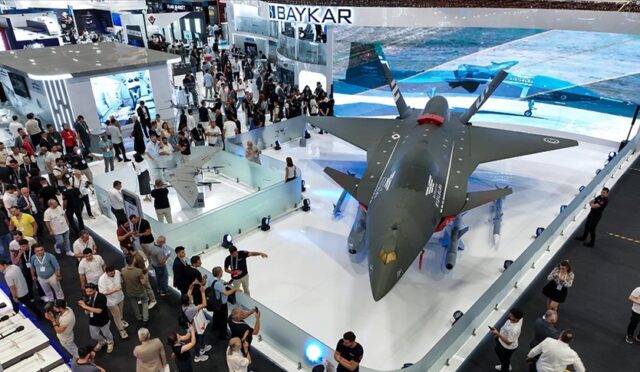
The UAV has also drawn comparisons to the XQ-58A Valkyrie, developed by the American defense firm Kratos, due to its visual similarities. Furthermore, LOWUS shares characteristics with Boeing’s Airpower Teaming System, known as the MQ-28 Ghost Bat, which was originally designed for the Royal Australian Air Force by Boeing’s Australian division. These similarities highlight the competitive landscape of UAV technology as nations strive to advance their aerial capabilities.
In a related development, Turkey is redirecting its ammunition exports towards supplying UAVs to South Korea, which indicates a growing collaboration in unmanned aerial technology between the two nations. This shift underscores the increasing importance of UAVs in modern warfare and defense strategies.