Chinese Submarine Capabilities: A New Threat to US Defense
**Recent developments in naval technology have introduced a new layer of complexity to the security dynamics in the Asia-Pacific region. A semi-official report indicates that China is currently advancing a new submarine designed to counteract medium-range missile systems deployed by the United States in the Philippines. This new vessel is reportedly capable of carrying nuclear-tipped hypersonic missiles, posing a significant threat to the US Typhon missile system located in the region.**
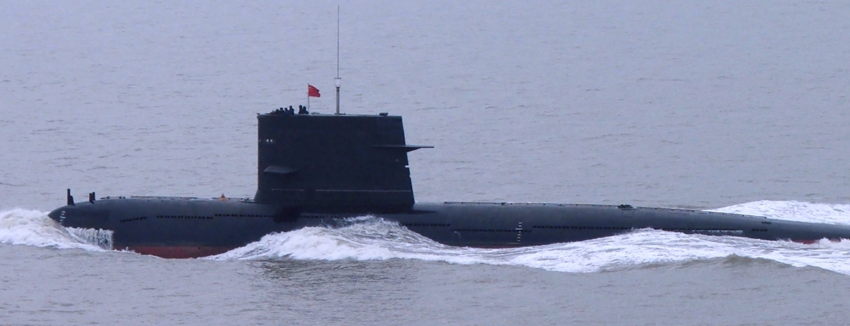
According to a report from the South China Morning Post, this submarine is being constructed at a shipyard in Wuhan, China, and is believed to be tailored specifically to neutralize the medium-range missile defenses in the Philippines. While the People’s Liberation Army (PLA) has not officially acknowledged the submarine’s development, detailed specifications have emerged from Naval & Merchant Ships, a publication associated with the China State Shipbuilding Corporation (CSSC).
The YJ-21 Hypersonic Missile and Its Implications
The YJ-21 hypersonic anti-ship missile, showcased on platforms like Weibo, is designed to strike targets within the Chinese mainland. It is anticipated that the US will deploy this advanced missile aboard Typhon medium-range missile launchers on Luzon Island by April 2024. Meanwhile, the new Chinese submarine is reportedly equipped to launch hypersonic missiles, with the potential to deliver nuclear payloads if needed.
The submarine is believed to be outfitted with the YJ-21 missile, which is also utilized by China’s Type 093 nuclear attack submarines. Reports suggest that the YJ-21 has an impressive range of 1,500 to 2,000 kilometers and can achieve speeds of up to Mach 10, approximately 12,000 km/h, significantly enhancing China’s offensive capabilities.
Technological Features of the New Submarine
First detected in mid-2024, this advanced submarine features a vertical launch system (VLS), allowing for diverse attack options. Its innovative X-shaped tail design is intended to improve maneuverability and stability underwater, potentially giving it an edge in naval engagements. Additionally, there are indications that the submarine may be equipped with an air-independent propulsion (AIP) system, enhancing its stealth and endurance.
In light of these developments, the United States may need to reconsider its military strategies to safeguard the Typhon missile system in the Philippines. The evolving capabilities of the Chinese submarine fleet could force a shift in the balance of power in the region.
Rising Tensions Between China and the Philippines
Tensions have escalated between China and the Philippines, particularly following remarks made by Chinese Foreign Minister Wang Yi in September 2024. Yi criticized the presence of Typhon launchers, suggesting they undermine regional peace and stability and contradict the interests of neighboring countries. In response, Philippine Defense Minister Gilberto Teodoro has indicated that he is employing reverse psychology to bolster the country’s defenses.
Teodoro’s challenge to Beijing highlighted the need for China to dismantle its nuclear arsenal and withdraw from the South China Sea, illustrating the growing assertiveness of the Philippines in the face of Chinese military expansion.
Philippine Leadership’s Response to China’s Military Advancements
Philippine President Ferdinand Marcos Jr. acknowledged in a January 2025 statement that China’s missile technology far surpasses that of the Philippines. He proposed a ceasefire on aggressive actions in the South China Sea, suggesting a withdrawal of the Typhon system in exchange. This diplomatic overture underscores the Philippines’ precarious position amid rising tensions.
However, China’s steadfast position continues to complicate relations. In February, Chinese Foreign Ministry Spokesperson Guo Jiakun asserted that China would not remain passive if its interests were threatened, characterizing the Philippines’ reliance on external security as a dangerous gamble.
Military Developments in the Region
As the geopolitical landscape shifts, both China and the US are ramping up their military capabilities in the region. Reports indicate ongoing projects in the realm of submarine-based UAVs from China, alongside extensive missile system training provided by the US to the Philippines. These developments reflect the heightened stakes in the ongoing security competition in the Asia-Pacific.
In summary, the emergence of China’s new submarine, coupled with its advanced missile technology, poses a formidable challenge to US defense strategies in the region. As tensions continue to mount, the balance of power remains in flux, with implications that could reshape the security framework of Southeast Asia.