Aerogel Antenna: NASA’s Ultra-Lightweight Communication Solution
**NASA is actively developing an ultra-lightweight antenna capable of providing uninterrupted communication crucial for modern aerospace applications.** Utilizing one of the lightest solid materials in the world, this innovative antenna aims to be integrated seamlessly into aircraft fuselages. The motivation behind this project is to create a more aerodynamic and reliable communication solution for drones and future air transportation systems.
The aerogel antenna, crafted by NASA, is specifically designed to enable satellite communication in scenarios where both power and space are at a premium. Composed of polymers—flexible, high-performance plastics—this remarkable material retains about 95% air composition, contributing to its unique combination of lightness and strength. This adaptability allows researchers to modify its properties to range from the flexibility of plastic film to the rigidity of plexiglass.
Testing and Development of the Antenna
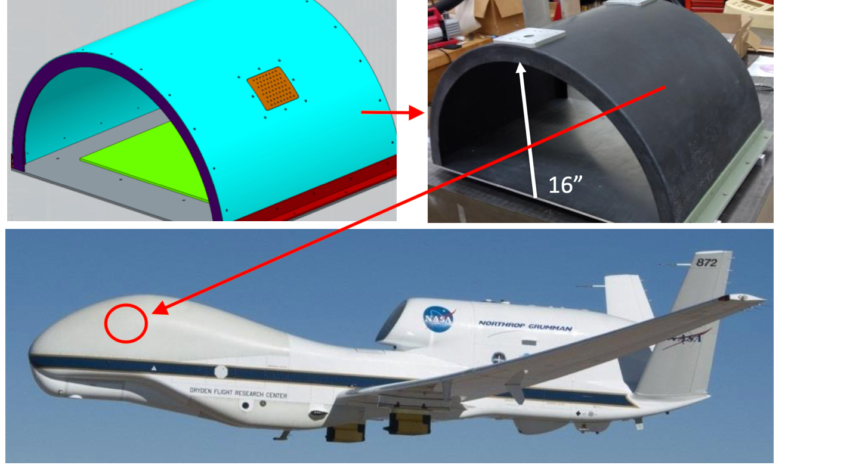
The aerogel active phased array antenna is set to be tested in a critical evaluation scheduled for October 2024, specifically targeting geostationary satellites. In the prototype, researchers strategically positioned a layer of aerogel between thin, circular copper cells, integrating it with a small circuit board before applying an electrically insulating film on top. This initiative is dubbed the “active phased array aerogel antenna,” which aims to streamline aircraft design by mimicking the aircraft’s shape. This not only reduces drag but also minimizes weight and spatial requirements while allowing for precise adjustments of individual array elements to diminish signal interference.
Moreover, these antennas are less obtrusive than traditional rod or wing-types, making them a more aesthetically pleasing choice for aircraft design. The final product is expected to resemble a honeycomb structure, designed to be mounted flat against the aircraft surface.
Significance of Satellite Testing
To fully assess the practical capabilities of the aerogel antenna, thorough satellite testing is essential. Conventional aircraft rely on RF, VHF, and HF communication with ground stations via SATCOM, a method prone to delays and potential disconnections. However, NASA’s new technology promises uninterrupted satellite connections throughout a flight, thanks to the dense flow of radio waves provided by the aerogel antenna.
Glenn Researcher Bryan Schoenholz emphasizes the significance of this advancement, noting, “We can connect to two very different satellite systems with the same antenna. Low Earth Orbit (LEO) satellites operate at about 1200 miles above the Earth and move quickly, while Geostationary (GEO) satellites are positioned 22,000 miles away, maintaining a fixed location as they move at the same speed as the Earth’s rotation.”
Flight Tests and Future Plans
A variant of the aerogel antenna underwent testing on the Britten-Norman Defender, a general-purpose aircraft, during a flight demonstration with the U.S. Navy at Patuxent River Naval Air Station in Maryland in early 2024. Following these tests, NASA Glenn partnered with Eutelsat America Corp. to conduct ground testing on a version of the antenna in October. Successfully, a signal was transmitted from a fixed Eutelsat satellite, located 22,000 miles from the testing site, to a satellite dish on-ground at Glenn.
In another exciting development, a connection was established with Kepler’s low-orbit satellite team, indicating the versatile capabilities of the aerogel antenna. Looking to the future, NASA has plans to design, manufacture, and test an advanced iteration of the aerogel antenna by 2025, with aspirations to enhance communications systems, even targeting enemy satellites.