Professor Çetin Kaya Koç: Standing for Truth Amidst Atrocities
**Standing up for what is right has always come with a cost, especially during critical moments in history. The recent atrocities in Gaza have highlighted stark divisions in global perspectives. Those who chose to endorse the violence have often found themselves rewarded, while those who stood against it faced severe backlash. Notable individuals, institutions, and nations, from Harvard to protesters in Germany and Spain, have all paid a heavy toll for opposing the massacre. One such figure, whose story deserves particular attention, is Professor Dr. Çetin Kaya Koç.**
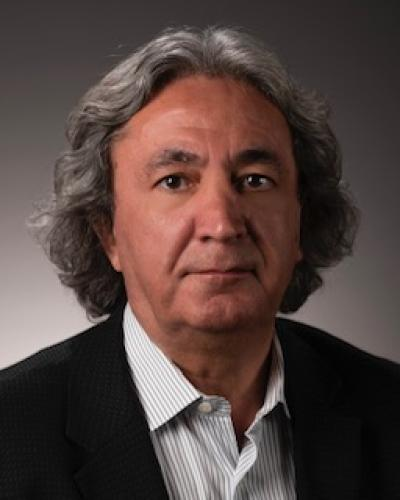
Professor Koç, the highest-ranked Turkish scientist among over 17,000 experts in computer science globally, has been a paragon of integrity in the face of overwhelming pressure. His journey back to Turkey through reverse brain drain underscores his commitment to making a difference. Recently, he found himself forced to resign from his editorial role in a journal he established, as well as from an organization dedicated to cryptology. Although he initially resisted drawing media attention to his plight, he ultimately revealed via social media that he had to step down due to his outspoken criticism of the Gaza atrocities.
In response to this injustice, Turkish media rallied to support Professor Koç, bringing his circumstances to light. Regrettably, foreign media outlets have largely overlooked the issue. The complex interconnectedness of politics, business, media, and academia in the Western world often perpetuates a Zionist narrative that stifles genuine discourse on sensitive matters. While they profess to uphold freedom of thought, any dissenting opinions that challenge the portrayal of Israel’s actions are often met with severe professional consequences. Individuals who highlight the realities of oppression risk being labeled as anti-Semitic, jeopardizing their careers or responsibilities.
Despite the heavy price he pays for advocating for the oppressed, Professor Koç remains steadfast in his principles. He embodies the notion that integrity and humanity hold far greater value than financial gain or temporary accolades. This stance does not seem to weigh heavily on his spirit; rather, it reflects a very human conviction that is seldom fully recognized. However, this reality pains those who know him personally. It becomes evident that not enough has been done to honor Professor Koç’s contributions to science and society.
Though he has been involved in academia in Turkey and mentored scholars internationally, his vast knowledge remains underutilized. There exists an enormous potential for his expertise to influence aspiring scientists and engineers. Professor Koç’s wealth of information flows like a spring—abundant yet often overlooked—and there is a pressing need for his insights to reach broader audiences in Turkey. This imperative becomes particularly salient against the backdrop of his past experiences, including betrayal by institutions like FETÖ, which underscored the need for his contributions in a more supportive environment.
Ultimately, Professor Koç is not motivated by the pursuit of fame, fortune, or titles. Much like a fruit-bearing tree that offers its yield freely to those around it, he aspires to share his knowledge without expectation. One must ponder whether there exists an abundance of untapped talent and expertise in our nation that remains hidden, or if it is simply a lack of visibility for figures like Professor Koç. May this article serve as a catalyst for greater recognition of his indispensable contributions.