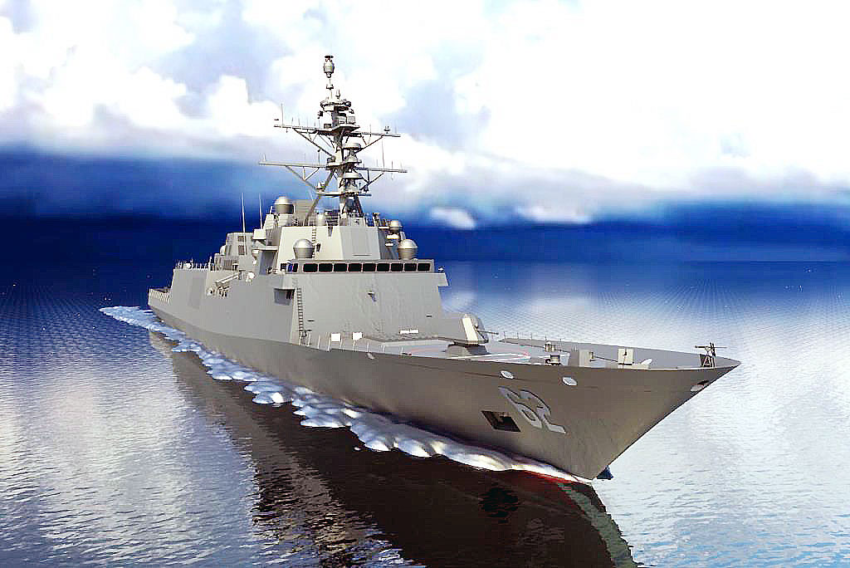
Constellation-class Frigate: Delays and Design Concerns
**A significant concern emerging in the U.S. Navy’s future naval strategy is the Constellation-class frigate, with shocking reports revealing that only 10% of its construction has been completed after two years.** Initially launched in 2020 at the Marinette Marine shipyard in Wisconsin, the USS Constellation finds itself at the center of a major crisis. According to Defense News, this situation hampers the program’s goal of establishing a new generation of naval power.
The frigate was originally projected to build upon the existing design of the FREMM-class vessels developed jointly by Italy and France, with the aim of implementing just a 15% modification to save costs and expedite production. However, the current scenario indicates a far more extensive redesign, with 85% of the Constellation-class ships being adapted to fully align with the specific requirements of the U.S. Navy.
Design Crisis and Performance Concerns
The War Zone reports that major discussions have taken place between Fincantieri and the Navy during the design phase. Mark Vandroff, Vice President of Fincantieri, emphasized that achieving a final functional design would not be completed until the summer of 2025. This delay has resulted in substantial alterations to the vessel’s dimensions and weight, raising red flags regarding its overall performance.
Concerns have been raised about the increased size of the Constellation-class compared to the FREMM class, clouding its range, speed, and maneuverability. As the ship grows in physical footprint, the Navy is now tasked with addressing these performance issues that could affect its operational capabilities.
Construction Delays and Cost Increases
The initial delivery plan for the first Constellation-class ship has shifted from 2026 to 2029, significantly pushing back availability for the Navy. Additionally, the projected cost has ballooned from 1 billion dollars to approximately 1.4 billion, highlighting a concerning increase in financial burdens associated with the program.
The U.S. Navy had originally ordered six frigates, with ambitions to expand that number to at least 10. However, unresolved challenges may jeopardize this goal. A significant contributor to the construction delays is the labor shortage in the U.S. shipbuilding industry, where there is a drastic need for skilled workers such as welders and electricians. Despite Fincantieri’s infrastructure investments at the Marinette shipyard aimed at producing two ships per year, the labor gap remains a critical hindrance to achieving full production capacity.
Uncertain Future of the Constellation Program
Rob Wittman, the Vice Chairman of the U.S. House Armed Services Committee, shared insights on the trajectory of the Constellation program, expressing alarm at how the situation has evolved. Wittman noted that the initial plan was to leverage 85% of the FREMM design with minimal changes, yet the reverse has now occurred, with escalating costs and timelines threatening the integrity of the project.
He stressed the urgent need for the Navy to either regain control of the project promptly or explore alternative options before irreversible consequences materialize. The future of the Constellation program hangs in the balance as stakeholders grapple with an increasingly complex set of challenges.
Related
Recent discussions emphasize scrutiny over the aging ships of the U.S. Navy, highlighting the critical need for modernization amidst pressing operational needs.